

Peptide research has its own vocabulary. Bookmark this glossary as a quick reference for protocols, certificates and supplier documentation.
Synthesis and structure
- Amino acid residue — a single amino acid unit within a chain.
- Peptide bond — the amide link between residues.
- SPPS — solid-phase peptide synthesis.
- Fmoc — a base-labile amine protecting group used in SPPS.
- Deletion sequence — a chain missing one residue.
- Truncated sequence — an incomplete chain.
- Cyclic peptide — a chain joined end to end or via side chains.
- Lipidation — attachment of a fatty acid to modify behaviour.
Analysis and quality
- HPLC — high-performance liquid chromatography.
- Retention time — when a compound elutes from the column.
- Purity — target peak area as a percentage of total.
- Net peptide content — peptide fraction of total powder weight.
- MS — mass spectrometry for identity confirmation.
- ESI / MALDI — ionisation methods for MS.
- CoA — Certificate of Analysis.
- Lot number — identifier for a single production batch.
- Endotoxin — bacterial lipopolysaccharide contaminant.
- EU — endotoxin unit.
Handling and storage
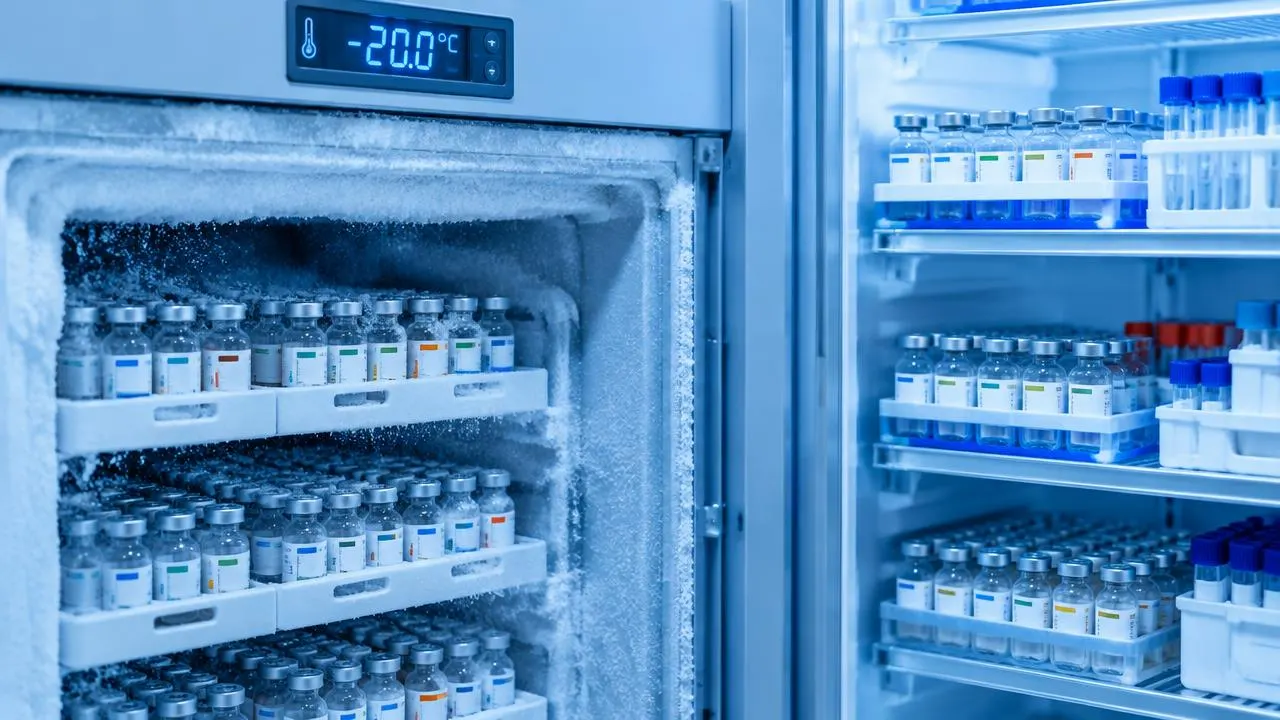
- Lyophilisation — freeze-drying to a stable powder.
- Reconstitution — dissolving powder in a diluent.
- Bacteriostatic water — sterile water with 0.9% benzyl alcohol.
- Aliquot — a single-use portion.
- Freeze-thaw cycle — one freeze and one thaw.
- Hygroscopic — readily absorbs moisture.
- Counterion — the salt partner, e.g. TFA or acetate.
- Oxidation — chemical change, often of Met or Cys.
- Deamidation — conversion of Asn/Gln side chains.
- Aggregation — self-association of peptide molecules.
- Low-binding tube — plastic that minimises adsorption.
- RUO — research use only.
New to the field? Start with What Are Research Peptides?.