
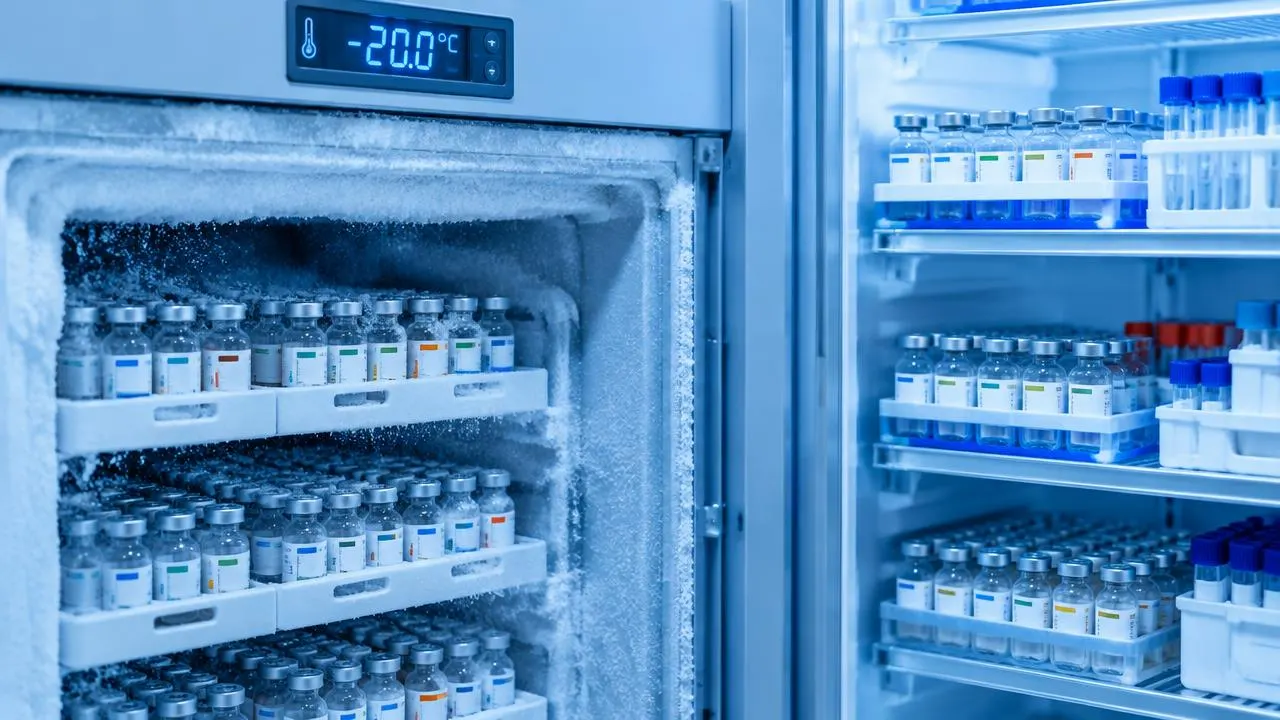
Correct storage is the cheapest quality control a laboratory can perform. The same peptide can deliver reproducible results for a year or degrade in weeks depending on temperature, light and moisture.
Recommended storage conditions
- Long-term lyophilised storage: −20 °C or colder, sealed and dry.
- Short-term lyophilised storage (days to weeks): 2–8 °C is generally acceptable.
- Reconstituted material: 2–8 °C for short periods, or aliquoted and frozen for longer use.
- Avoid frost-free freezers where possible — their defrost cycles cause temperature swings.
Light and oxidation
Residues such as methionine, cysteine and tryptophan are prone to oxidation, a process accelerated by light and oxygen. Store vials in their outer packaging or an opaque box and minimise headspace exposure after opening.
Humidity is the hidden risk
Lyophilised peptides are hygroscopic. Opening a cold vial in a warm room draws moisture onto the powder. Always equilibrate to room temperature first and consider storing vials with desiccant.
Related reagents: research peptides with documented storage data. Each batch ships with documented HPLC purity and a Certificate of Analysis on request.