
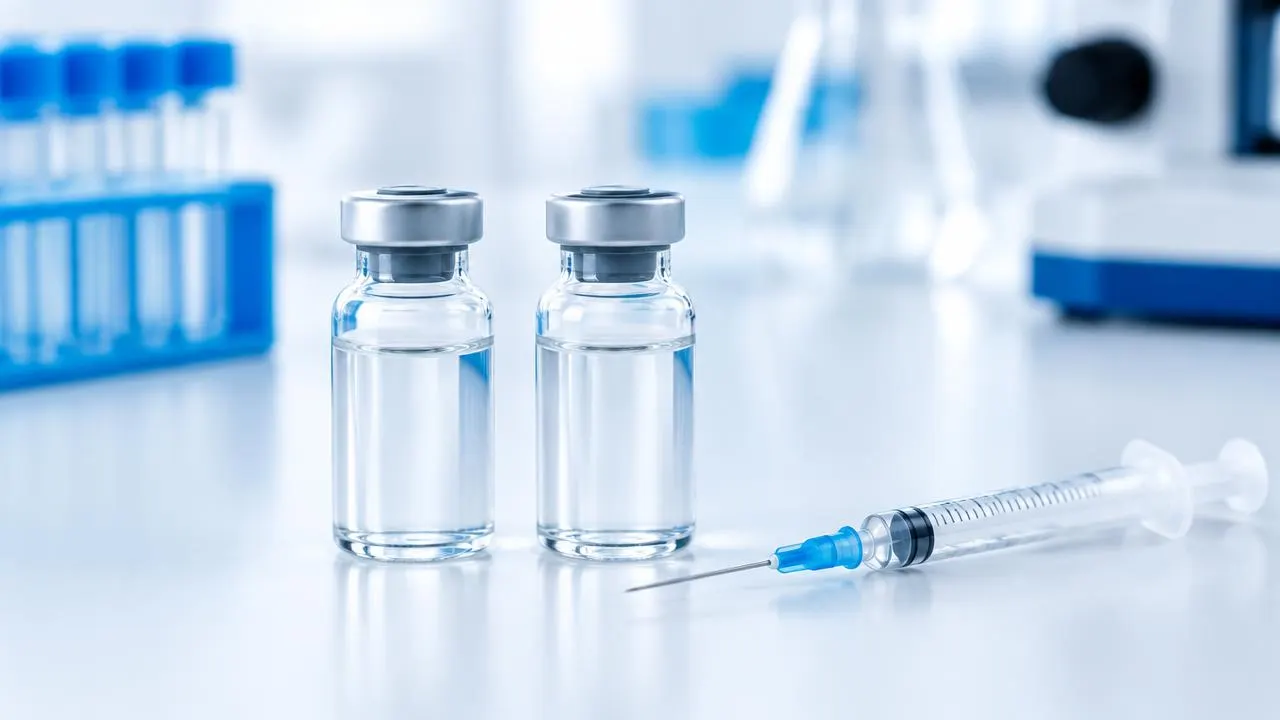
Reconstituting a lyophilised peptide means choosing a diluent, and the two most common options in research laboratories are sterile water and bacteriostatic water. They look identical but behave differently over time.
What makes water bacteriostatic
Bacteriostatic water is sterile water containing 0.9% benzyl alcohol. The preservative inhibits microbial growth, which makes it suitable for vials that will be accessed more than once during a study.
Side-by-side comparison
- Sterile water: single-use, no preservative, discard after opening.
- Bacteriostatic water: multi-access, preservative inhibits growth, typically used within a defined period after first puncture.
- Both: must be handled aseptically and stored according to the label.
When to choose an alternative
Some peptides are poorly soluble in neutral water or are sensitive to benzyl alcohol. Hydrophobic sequences may need a small amount of dilute acetic acid or an organic co-solvent first. Always check the reagent data sheet.
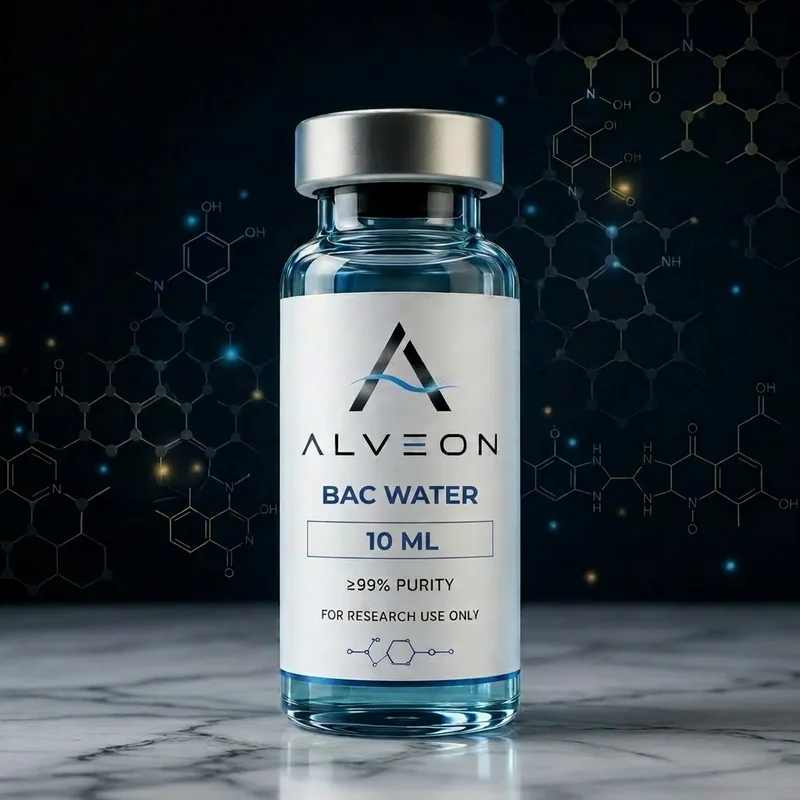
Related reagents: BAC water 10 ml laboratory diluent. Each batch ships with documented HPLC purity and a Certificate of Analysis on request.