
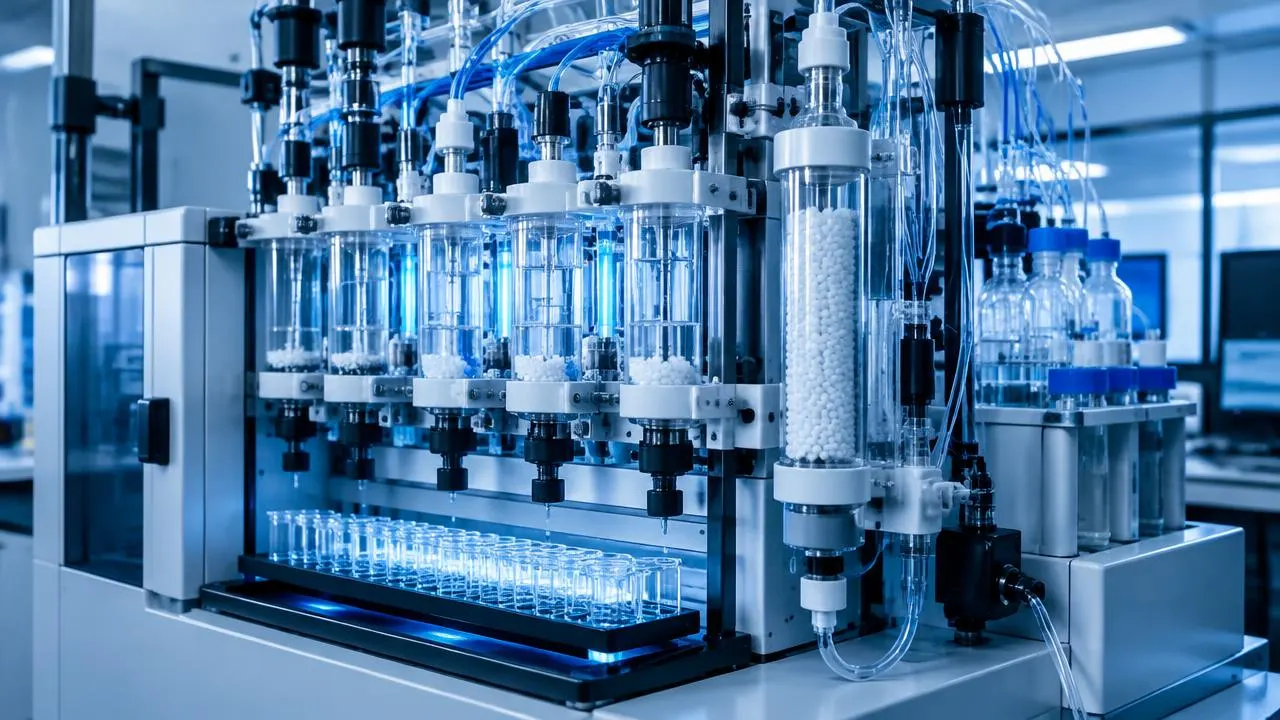
Solid-phase peptide synthesis, introduced by Bruce Merrifield in the 1960s, transformed peptide chemistry by anchoring the growing chain to an insoluble resin. Excess reagents can simply be washed away after each step.
The SPPS cycle
- Deprotection: the Fmoc protecting group is removed from the terminal amine.
- Activation and coupling: the next protected amino acid is activated and attached.
- Washing: unreacted reagents are flushed away.
- Repeat until the full sequence is assembled.
Why coupling efficiency matters
Even 99% efficiency per step compounds quickly: across 40 couplings only about 67% of chains are full length. Truncated and deletion sequences must then be removed by preparative HPLC — which is why longer peptides are more demanding to supply at ≥99% purity.
Cleavage, purification and lyophilisation
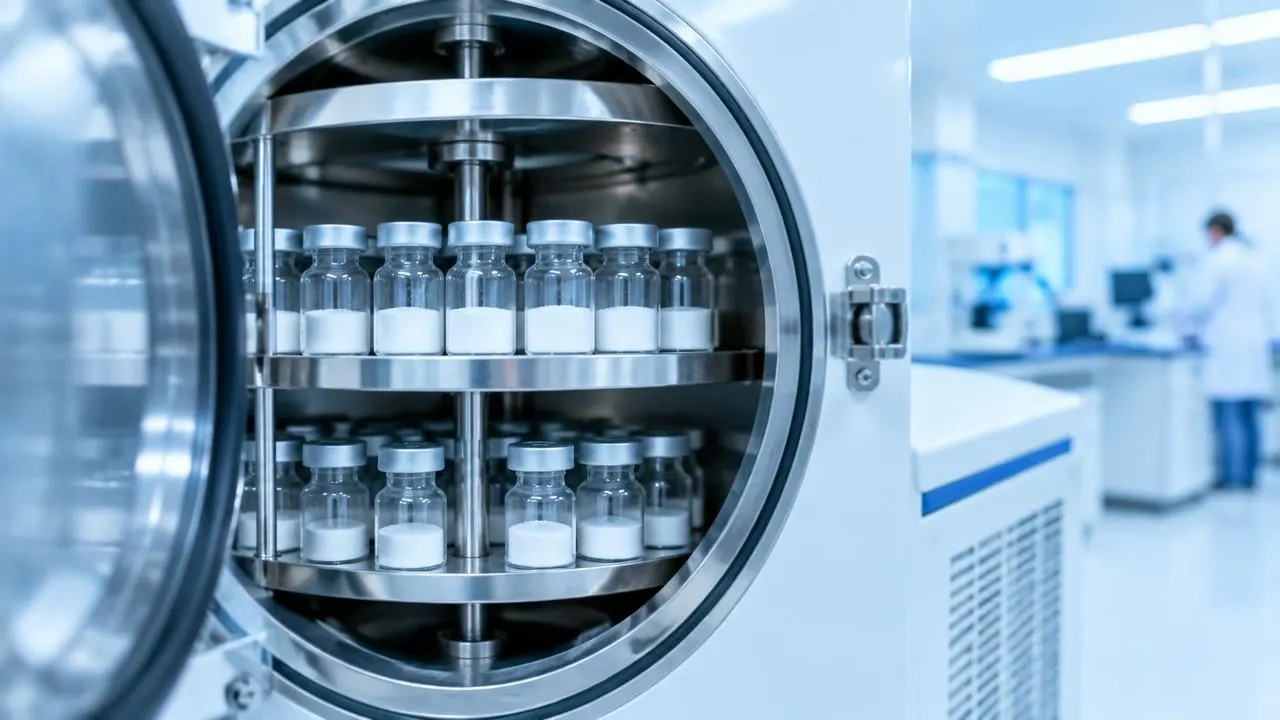
A strong acid cocktail releases the peptide from the resin and removes side-chain protecting groups. The crude product is purified by reverse-phase HPLC, verified by mass spectrometry and freeze-dried to the powder found in the vial.
Related reagents: ≥99% purity synthetic peptides. Each batch ships with documented HPLC purity and a Certificate of Analysis on request.