
Peptides are dynamic molecules. Given water, heat, light or the wrong pH they slowly change — and each change can alter results in an assay.
Chemical degradation
- Oxidation of Met, Cys and Trp residues, accelerated by light and dissolved oxygen.
- Deamidation of Asn and Gln, especially at neutral to alkaline pH.
- Hydrolysis of labile bonds such as Asp-Pro.
- Disulfide scrambling in cysteine-containing sequences.
Physical degradation
Aggregation and adsorption to container surfaces reduce the effective concentration without changing the molecule. Low-binding tubes and avoiding vigorous shaking help.
Prevention checklist
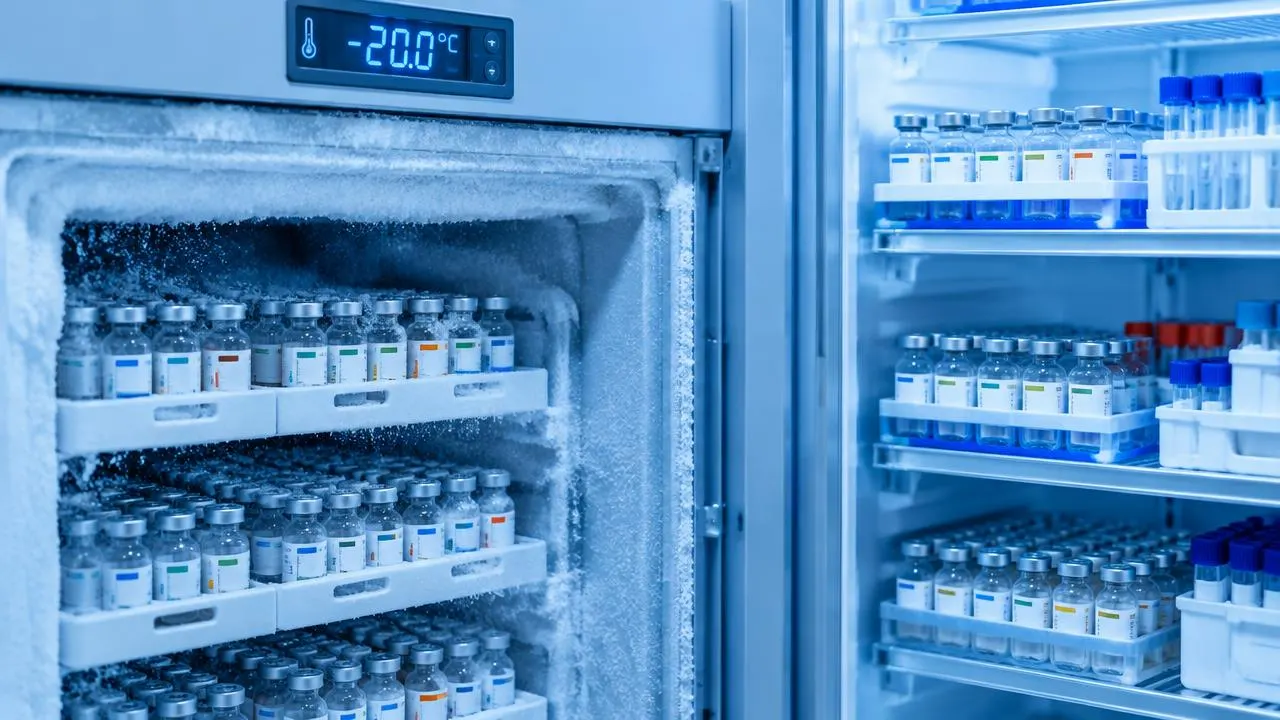
- Store lyophilised at −20 °C, protected from light.
- Reconstitute at an appropriate pH for the sequence.
- Aliquot and avoid repeated freeze-thaw cycles.
- Swirl gently rather than vortex.
- Re-verify by HPLC for long studies.