
In less than a decade the incretin peptide class has moved from a niche corner of endocrinology to the most heavily studied area in modern metabolic research. Three peptides define the current generation: Semaglutide, a pure GLP-1 receptor agonist; Tirzepatide, a dual GIP/GLP-1 agonist; and Retatrutide, a triple GLP-1 / GIP / glucagon agonist.
They are frequently discussed as a single category — "GLP-1 peptides" — but the receptor profiles, potencies, and downstream effects diverge in ways that matter for study design. This guide walks through what each one is, how they compare, and how to think about them from a research perspective.
The incretin system in one paragraph
Incretins are gut-derived hormones released after a meal that potentiate glucose-stimulated insulin secretion. GLP-1 (glucagon-like peptide-1) and GIP (glucose-dependent insulinotropic polypeptide) are the two dominant incretins in humans. Both act via G-protein-coupled receptors on pancreatic beta cells, but they also have significant activity in the brain, adipose tissue, and gastrointestinal tract. Modern incretin peptides are engineered analogues that resist rapid degradation by DPP-4 and extend the natural signalling window from minutes to days.
Semaglutide — pure GLP-1 agonism
Semaglutide is a long-acting GLP-1 receptor agonist with a fatty-acid modification that allows albumin binding and a plasma half-life measured in days rather than minutes. Its receptor profile is essentially single-target: high-affinity, selective GLP-1 activation.
- Receptor targets: GLP-1 only.
- Approximate elimination half-life: ~7 days (once-weekly dosing paradigm in research protocols).
- Prominent research applications: glucose homeostasis, insulin sensitivity, appetite regulation, and CNS effects of GLP-1 receptor activation.
Tirzepatide — dual GIP/GLP-1 agonism
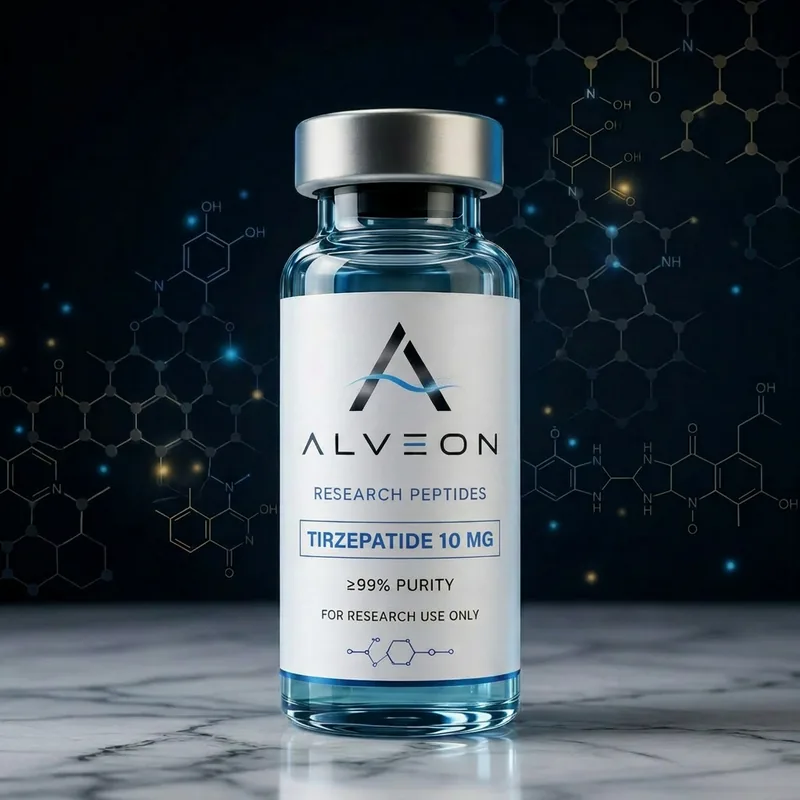
Tirzepatide is a synthetic peptide engineered to activate both GLP-1 and GIP receptors from a single molecule. The dual profile matters because GIP and GLP-1 signal through overlapping but non-identical pathways, and adding GIP activity appears to amplify effects on adipose tissue and energy expenditure beyond what pure GLP-1 agonism achieves in comparable research models.
- Receptor targets: GLP-1 and GIP (dual agonist).
- Approximate elimination half-life: ~5 days.
- Prominent research applications: comparative incretin signalling studies, adipose tissue metabolism, and dual-pathway insulin sensitivity research.
Retatrutide — triple GLP-1 / GIP / glucagon agonism
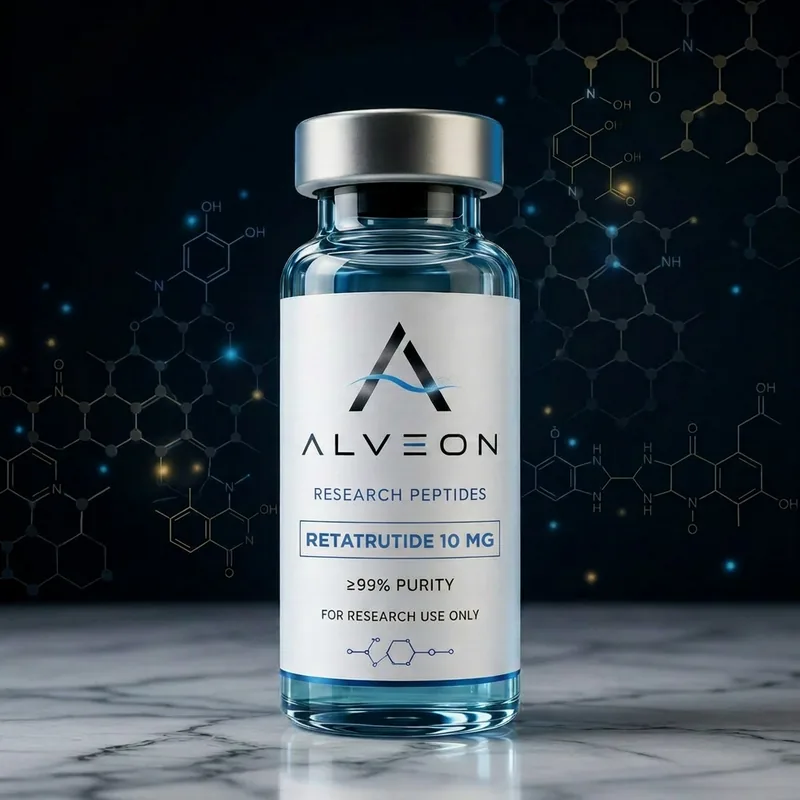
Retatrutide extends the multi-receptor design one step further by adding glucagon receptor activation to the GLP-1 / GIP profile. Glucagon activity is traditionally associated with raising blood glucose, which sounds counterproductive in a metabolic peptide — but its effects on hepatic energy expenditure and lipolysis, balanced by concurrent GLP-1 activity, have made it one of the most closely watched compounds in current metabolic research.
- Receptor targets: GLP-1, GIP, and glucagon (triple agonist).
- Approximate elimination half-life: ~6 days.
- Prominent research applications: energy expenditure and body-composition studies, hepatic lipid metabolism, and comparative multi-receptor signalling research.
Side-by-side comparison
Choosing between them for a research protocol
Three questions usually decide which of the three is most appropriate for a given study.
- Which pathway is the research question actually about? A study designed to isolate GLP-1 receptor biology should use Semaglutide; a multi-receptor question calls for Tirzepatide or Retatrutide, with the extra receptors becoming a variable to control rather than eliminate.
- What is the dosing frequency the protocol can support? All three are long-acting, but research schedules involving repeated tissue sampling may prefer the slightly shorter half-life of Tirzepatide over Semaglutide.
- How comparable does the study need to be to existing literature? Semaglutide has by far the largest published research corpus; Tirzepatide is well characterised; Retatrutide is the newest of the three and still building its published record.
Laboratory handling: all three
- All three are supplied lyophilised. Reconstitute with bacteriostatic water using the standard protocol covered in the dedicated reconstitution guide.
- Store lyophilised vials at −20 °C in the dark; reconstituted vials at 2–8 °C for up to four weeks in BAC water.
- Aliquot for long protocols. Repeated freeze-thaw cycles degrade all three peptides regardless of their in-vivo stability.
- Source only from suppliers who publish batch-specific HPLC data at ≥99% purity — impurity load is amplified by the very long dosing intervals these peptides use.