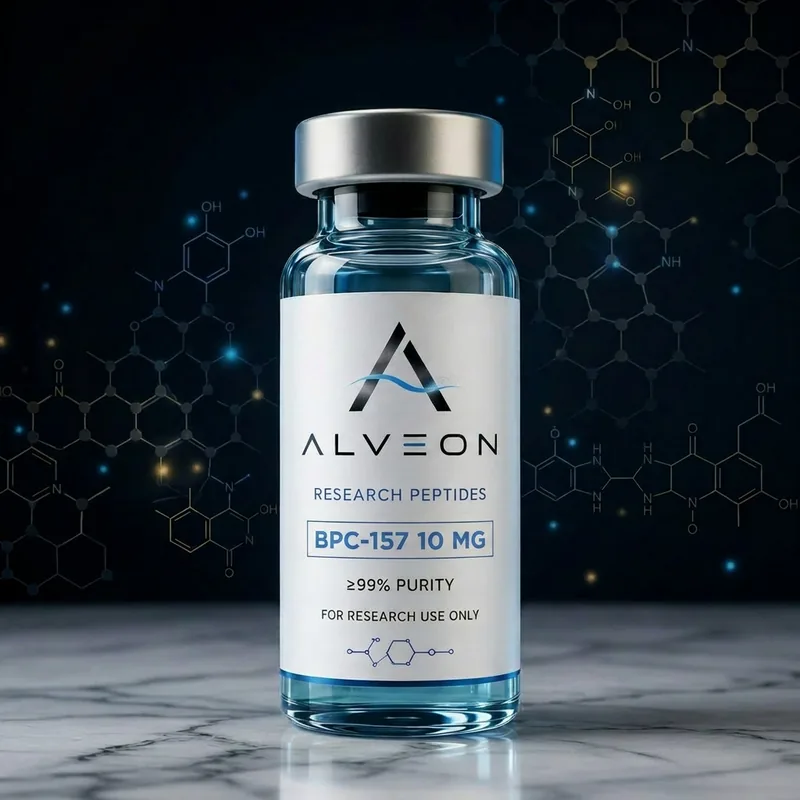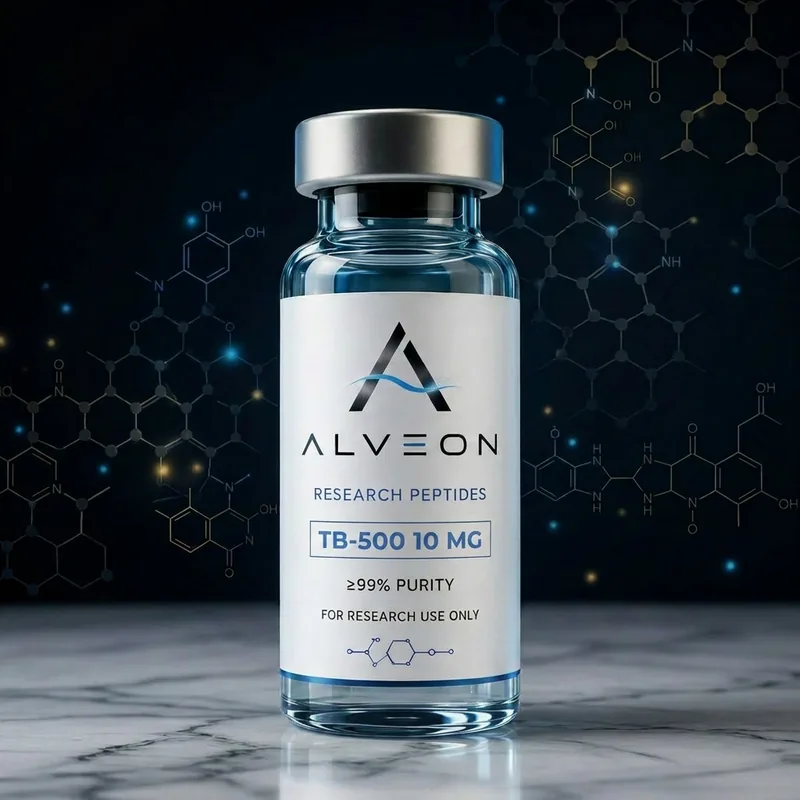

BPC-157 and TB-500 are the two most-requested peptides in tissue-repair research, and they are frequently discussed as if they were interchangeable. They are not. They target different pathways, they are studied in different injury models, and they carry different handling considerations. Understanding those differences is the difference between a mechanistically clean study and a study whose results cannot be attributed to one specific intervention.
What each peptide is
BPC-157
BPC-157 — Body Protection Compound 157 — is a stable pentadecapeptide (15 amino acids) derived from a protective protein found in gastric juice. It is unusually stable at physiological pH and resistant to gastric acid, which is why the research literature includes both parenteral and oral administration models.
TB-500
TB-500 is a synthetic peptide fragment corresponding to a biologically active region of thymosin beta-4 (Tβ4). Thymosin beta-4 itself is a 43-amino-acid protein present in nearly every mammalian cell; TB-500 reproduces the actin-binding motif responsible for much of its cellular activity.
Mechanism of action
The two peptides converge on "tissue repair" but arrive there from different molecular directions.
- BPC-157 has been characterised in the literature as upregulating VEGFR2 expression and modulating the nitric oxide system, with downstream effects on angiogenesis, fibroblast migration, and epithelial repair. It also appears to protect the gastrointestinal epithelium through a distinct mechanism tied to its gastric-juice origin.
- TB-500 acts primarily through its actin-binding motif, sequestering G-actin monomers and modulating cytoskeletal dynamics. That effect on the cytoskeleton translates into enhanced cell migration, angiogenesis via a different upstream pathway, and modulation of inflammatory cell trafficking.
Research model applications
In the preclinical literature the two peptides tend to be studied in different injury models, driven by their mechanisms.
BPC-157 is prominent in:
- Tendon and ligament injury models, particularly Achilles tendon transection.
- Gastrointestinal integrity models — colitis, gastric ulcer, and inflammatory bowel research.
- Vascular repair and angiogenesis assays.
- Traumatic brain injury and peripheral nerve regeneration models.
TB-500 is prominent in:
- Cardiac repair models following ischemic injury.
- Corneal wound-healing assays, where cell migration is the rate-limiting step.
- Dermal wound closure studies.
- Skeletal muscle regeneration following crush or laceration injury.
Onset and duration in research protocols
Published preclinical work suggests BPC-157 produces measurable effects on shorter timescales, with effects observed in acute-injury models within days of administration. TB-500 tends to be dosed less frequently in research protocols — its cellular effects, once initiated, appear to persist longer, and repeat dosing is often spaced over multiple days rather than daily.
Laboratory handling: what differs
- Both peptides are supplied lyophilised and reconstituted with bacteriostatic water. See the dedicated reconstitution guide on this blog.
- BPC-157 is unusually stable at room temperature in solution — a research advantage for multi-day dosing protocols, though refrigerated storage remains best practice.
- TB-500 is a longer peptide and slightly more sensitive to repeated freeze-thaw cycles. Aliquot the reconstituted stock immediately for any long-duration study.
- Both should be sourced with a batch-specific Certificate of Analysis confirming ≥99% purity by HPLC.
Combining the two in research protocols
Some published research protocols use BPC-157 and TB-500 together on the reasoning that their mechanisms are complementary — vascular and epithelial repair from BPC-157, cytoskeletal and migratory effects from TB-500. From a study-design perspective, combination arms need a matched single-peptide comparator or the effect of the combination cannot be attributed to synergy versus additive activity.